

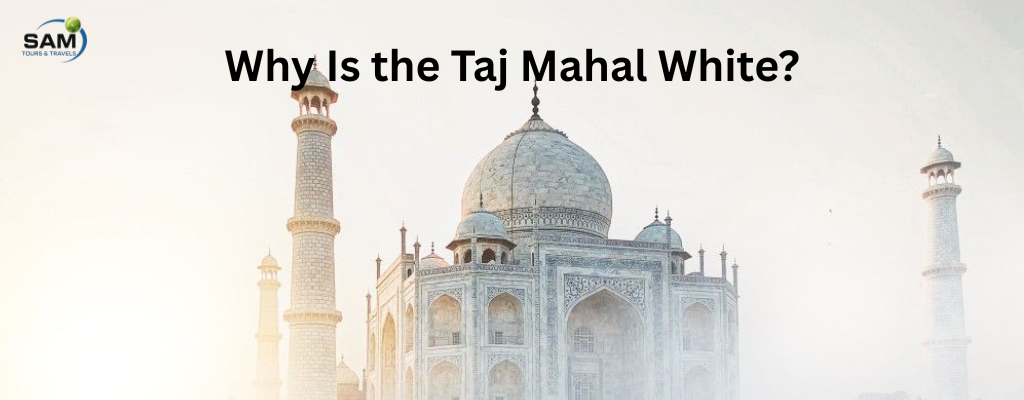
The Taj Mahal is one of the most beautiful monuments in the world, admired for its glowing white appearance. Many visitors often ask, “Why is the Taj Mahal white?” The answer lies in its unique construction material, cultural symbolism, and extraordinary Mughal architecture.
Built by Mughal Emperor Shah Jahan in memory of his beloved wife Mumtaz Mahal, the Taj Mahal’s white beauty symbolizes love, purity, and timeless elegance.


The Taj Mahal Is Made of White Marble
The primary reason the Taj Mahal is white is because it was built using Makrana white marble, sourced from Rajasthan, India. This premium-quality marble is known for its durability, smooth texture, and natural shine.
Unlike ordinary stone, Makrana marble reflects sunlight beautifully, making the Taj Mahal glow at different times of the day. The marble was transported from Rajasthan to Agra using elephants and carts during the Mughal era.
Symbolism Behind the White Color
In Mughal culture, white was often associated with purity, peace, spirituality, and eternity. Since the Taj Mahal was built as a symbol of eternal love, white marble was chosen to reflect the emotional and spiritual significance of the monument.
The pure white appearance of the Taj Mahal represents the deep love Emperor Shah Jahan had for Mumtaz Mahal, making it more than just a building—it became a symbol of devotion.
Why Does the Taj Mahal Change Colors?
One of the most fascinating features of the Taj Mahal is that it appears to change color throughout the day. While it is made of white marble, the monument reflects light differently depending on the weather and time.
Morning (Sunrise)
During sunrise, the Taj Mahal often appears soft pink or golden, creating a magical atmosphere for visitors and photographers.
Afternoon
In bright sunlight, the monument shines in its purest form, looking bright white and radiant.
Evening (Sunset)
At sunset, the marble reflects warm sunlight and often appears orange, golden, or slightly reddish.
Moonlight
During a full moon night, the Taj Mahal glows with a silver-white appearance, making it look dreamy and unforgettable.
This natural color-changing effect is one of the reasons why millions of tourists visit the Taj Mahal every year.
Intricate Marble Work and Precious Stones
The beauty of the Taj Mahal is not only because of its white marble. The monument also features detailed carvings and decorative stone inlay work known as Pietra Dura.
Skilled artisans embedded semi-precious stones into the marble to create:
- Floral designs
- Geometric patterns
- Arabic calligraphy
- Decorative artwork
These artistic details enhance the monument’s elegance and uniqueness.
Environmental Effects on the White Marble
Over the years, pollution and environmental changes have affected the whiteness of the Taj Mahal. Authorities regularly clean the marble using special mud-pack treatments to maintain its original shine and protect this historical wonder.
Conservation efforts help preserve the beauty of the Taj Mahal for future generations.
Why the Taj Mahal Still Amazes the World
The Taj Mahal is more than a white monument—it is a masterpiece of architecture, emotion, and craftsmanship. Its perfect symmetry, peaceful gardens, detailed artwork, and glowing white marble make it one of the most iconic landmarks in the world.
Today, the Taj Mahal is recognized as a UNESCO World Heritage Site and remains one of the Seven Wonders of the World, attracting travelers from across the globe.
Final Thoughts
So, why is the Taj Mahal white? It is white because it was built with premium Makrana marble, chosen for its beauty, durability, and symbolic meaning. The white color represents purity, peace, and eternal love while allowing the monument to glow beautifully under changing light.
Whether you visit at sunrise, sunset, or under moonlight, the white beauty of the Taj Mahal leaves every traveler amazed and inspired.


Leave a Reply